

I decided to finally put together a guide to Collagen Peptides vs Gelatin because people are constantly asking me about the products as individuals and how they relate to each other.
In the gut-healing community and overall health and wellness space, both collagen and gelatin powder are popular terms.
And there is a very good reason for it, too.
Come with me to explore why today.
Do Collagen and Gelatin Have the Same Health Benefits?
Yes.
When it comes to collagen vs gelatin, there is no major difference.
Collagen and gelatin are the same exact thing as far as health benefits are concerned, according to Dr. Amy Myers. They simply have different uses.
Gelatin is the cooked form of collagen. It’s the cooking form (gelatin) that gives it a very different texture, and makes collagen and gelatin different depending on the use.
When you open a container of each, they will look the same, but if you drop a scoop of each into water, they will not act the same. More on that later.
So, then, what exactly are the benefits of collagen and gelatin? Here are 5.
5 Collagen and Gelatin Gut Health Benefits
Regardless of whether you choose collagen or gelatin, it’s a good idea to incorporate them as often as you can.
Here are 5 health benefits of gelatin and collagen for gut health in particular:
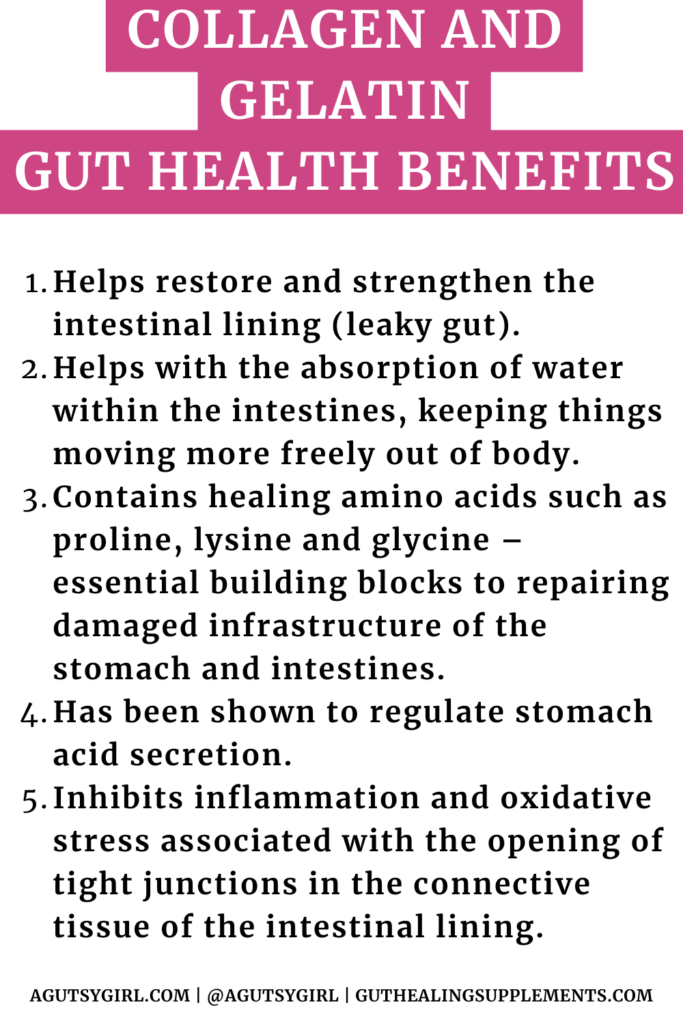
- Helps restore and strengthen the gut lining (leaky gut).
- Helps with the absorption of water within the intestines, keeping things moving more freely out of body.
- Contains healing amino acids such as proline, lysine and glycine – essential building blocks to repairing damaged infrastructure of the stomach and intestines.
- Has been shown to regulate stomach acid secretion.
- Inhibits inflammation and oxidative stress associated with the opening of tight junctions in the connective tissue of the intestinal lining.
5 General Benefits for Collagen and Gelatin Use
Furthermore, here are 5 other health benefits of gelatin and collagen for using these dietary supplements:
- Can improve skin health.
- Aids in Leaky Gut Syndrome healing (intestinal permeability – #1 from above).
- Can strengthen hair, support nail growth, and teeth.
- Might ease joint pain and supports bone health.
- Potential increase in athletic performance and preserving muscle mass.
A Guide to Collagen Peptides vs Gelatin
Click HERE to save this for later.
Collagen
Collagen is the most abundant protein in the body and is a key constituent of all connective tissues.
You actually have more collagen in your body than any other type of protein. Gram for gram it’s stronger than steel!
However, according to Dr. Myers, “by age 40, collagen begins to deplete faster than your body can reproduce it. By age 60, over ½ of your body’s collagen has been depleted. In addition to aging, other factors impact collagen levels, including genetics, smoking, pollution, excessive sun exposure, and nutritional deficiencies.”
In fact, as it decreases (or the body simply doesn’t have enough due to another reason), the following can occur:
- Wrinkles and crepey skin
- Stiffer, less flexible tendons and ligaments
- Shrinking, weakening muscles
- Joint pain or osteoarthritis due to worn cartilage
- Gastrointestinal problems due to thinning of the lining in your digestive tract
Who Should Take Collagen
Those who are looking for the perfect protein to have on hand, men and women, young and old. It’s a simple way to increase protein content in the diet.
The amino acid composition of dietary collagens is very similar to those in human collagens, making dietary collagen peptides ideal for supporting body collagen turnover and renewal.
Also, same people as gelatin.
When to Take Collagen
Take it to start and end the day, and anytime in between.
Some make note that it should be taken with a source of vitamin c to get the most out of it.
How to Take Collagen
Add to:
- beverages; any and all (remember that DIY Lemonade for Constipation recipe?!)
- spaghetti sauce
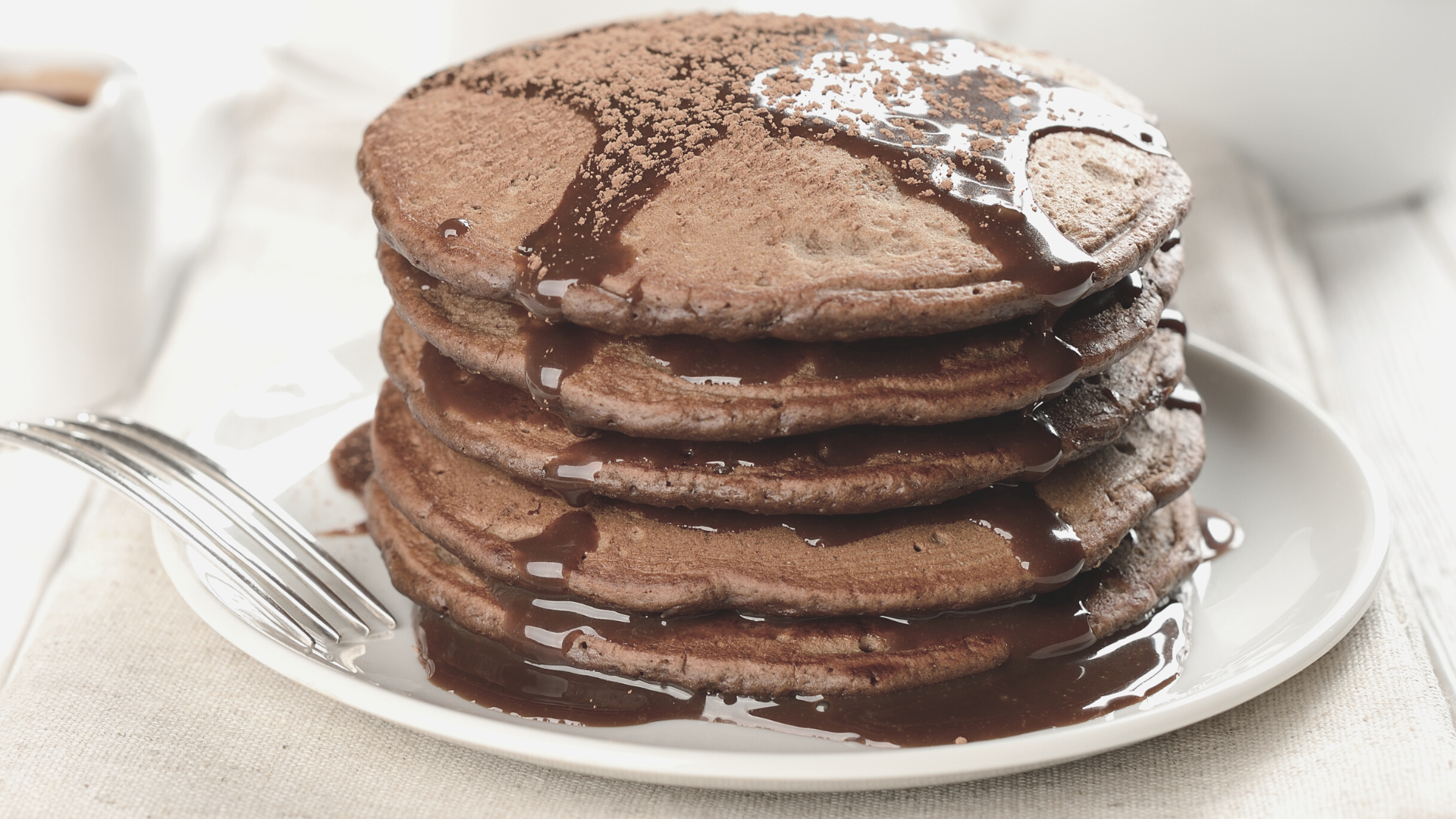
- pancakes (I add it to THIS pancake recipe all the time, in conjunction with the gelatin)
- muffins
- anything and everything from the gelatin list below
My current and favorite way for collagen supplementation is by adding it to my morning coffee. And this is simple:
- coffee
- add 1/3 – 1/2 scoop Re-Build
- add 1/3 packet Chocolate Salt LMNT
- splash of cream
If you want to see this in action, check it out HERE.
Collagen Brand of Choice
Because I’m such a fan of collagen and wanted to ensure I was getting enough collagen daily, I came out with my own collagen in powder form – Re-Build.
And yes, yes, I believe it’s the best one out there!
Ever since, I’ve been creating, using, and incorporating it into our daily routine. Our? Yes, everyone in this house uses collagen because if you had to choose between purchasing collagen or gelatin, I’d say to choose collagen.
The reason is simple; you can do more with it. Remember, this is the main difference between collagen and gelatin – collagen is easy to dissolve in both hot water and cold water.
Use code BLOG at checkout to save 15% off our collagen, Re-Build.
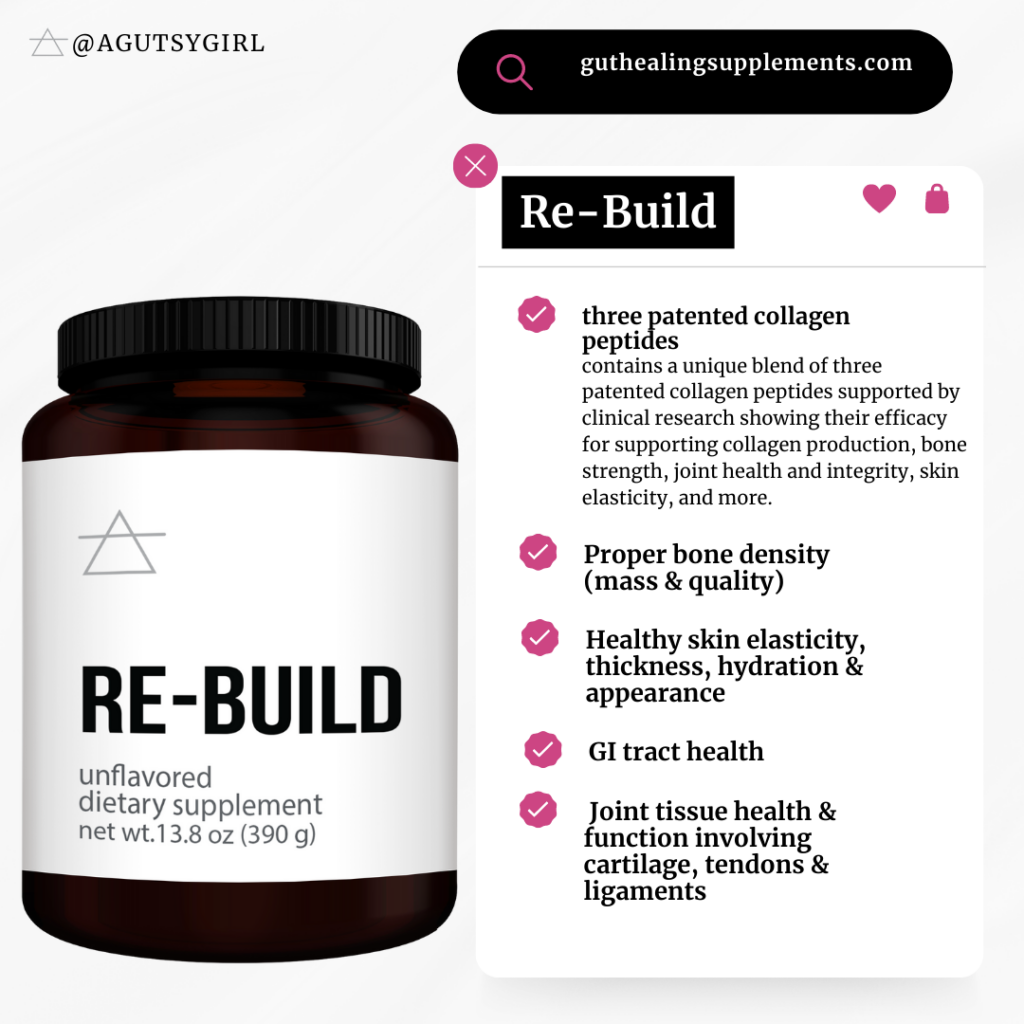
Re-Build
- collagen in the form of powder (so many in the Gutsy community are sick of swallowing so. many. pills.)
- contains a unique blend of three patented collagen peptides supported by clinical research showing their efficacy for supporting collagen production, bone strength, joint health and integrity, skin elasticity, and more
- flavorless with no added sweeteners, making it easyto add to any shake, smoothies, and other foods and beverages, making it convenient to ensure the adequate intake of collagen’s unique amino acids
- gluten-free, dairy-free, soy-free, non-GMO
- contains the research-proven collagen peptide blendsVerisol®, Fortigel®, and Fortibone® derived from specific dietary collagen proteins and produced with proprietary hydrolyzation technologies to optimize their beneficial properties
- Supports healthy bones
- Supports healthy skin appearance and integrity
- Supports healthy joints
It is the best collagen powder.
Gelatin
Gelatin is a great healer for people looking to strengthen their stomach and digestive lining, leading to better digestion and overall gut health.
Remember, gelatin is the same thing as collagen, except that it is the cooked form of collagen.
Who Should Take Gelatin
Those who are looking to strengthen their stomach and digestive lining, leading to better digestion and overall gut health.
Also, same people as collagen.
When to Take Gelatin
Take it to start and end the day, and anytime in between.
How to Take Gelatin
Unlike the collagen which is easy to incorporate in both hot liquids and cold liquids, the “instructions” are a little more particular for Gelatin.
The basic “rules” for gelatin are as follows:
- gelatin is liquid in hot, gel in cold
- always mix gelatin in cold liquid first
- keep the gelatin even spread about to avoid clumping
You’ll find more tips on gelatin HERE.

Gelatin Recipes
While collagen peptides powder are easier to incorporate with anything and everything, there are still some excellent culinary uses for gelatin.
Here are some:
- gummies
- AIP Bread (duh) – you’ll also find this recipe in my book, The Leaky Gut Meal Plan
- Pomegranate JELL-O Jigglers
- Banana Coconut Cream Pudding – which can also be found in my book, The Leaky Gut Meal Plan
- Paleo Birthday Cake
- Pumpkin Pie Pudding
- Super Breakfast Bowl
- Healthy Gut Chia Pudding
- Vanilla-Mint Mini Marshmallows
Using gelatin in the above recipes is typically a better option than using collagen.
What to Look for in a Quality Collagen and Gelatin Supplement
Regardless, you have to look for quality supplements since both collagen and gelatin are now common supplements.
Some things to look for:
- non-GMO
- no extra and unnecessary additives
The main thing to look for is that it is superior and super-high-quality. Especially because this is derived from animals, it’s very important from both a health and ethical standpoint.
I know you and I share these same values.
More questions? Let me know in the comments below.
If you enjoyed this post, you might also enjoy:
- Does Collagen Help with Acne (+ 4 Other Ways Collagen Can be an Overall Health Boost)
- Best Packaged Bone Broth
- Small Intestine Bacterial Overgrowth
Xox,
SKH

🤰 bloating be gone! weight loss through optimal gut health for women
💃ʜᴇᴀʟ ʏᴏᴜʀ ɢᴜᴛ. ʜᴇᴀʟ ʏᴏᴜʀ ʟɪfe.
🫶🏻 founder gutbyome.com



Thanks for the review. It was an excellent, easy to understand and a very helpful guide.
I’ve been taking collagen and gelatin off and on for the past 25 years. I found it helped immensely after my first surgery, with the joint recovery. I didn’t take it for much longer after that, because i wasn’t able to work as much and had to cut most of my supplements out.
After my 3rd surgery (first one was him, second shoulder, third another shoulder!), my hair fell out within the first week. That was one year 7 months ago. And my gut biome completely changed after the 2nd surgery and I never really recovered from it. I have incredible distention, which I never had. I was always low % BF with flat stomach. After that 2nd surgery (which was 7 months after my first surgery) I could tell something was wrong. Kaiser doesn’t address these issues.
I’m sure the collagen and gelatin would help, and hoping that by July I can start taking it again. I’ve been needing to put it back into my regime, but I’m not working right now. It will, however, be one of the first supps I will include when I can afford them again. For now I make organic bone broth when I can get my hands on grass fed organic turkey bones, or if my friends go hunting I ask for as many bones from whatever animal they’ve brought back.
Have you tried other sources of collagen and gelatin before Vital Proteins?
Glad to hear you’re back on the mend and feeling better 🙂
Hi sarah,
Do you know if people with histamine issues can safely take gelatin?
I was wondering what you think of the Knox brand, I want to start getting Gelatin, but also don’t have a ton of extra money. Do you think Knox could still be good for me even though it’s not natural? Or should I just spend the extra and get Great Lakes?
Hi! I would not do Knox. I don’t think it’s high quality. However, Great Lakes is cheaper than Vital Proteins 🙂
Cool thank you!!! I will do that!