
You’ve been following along for quite some time already, so you’re no stranger to Betaine HCl. But I have more info and a new spin to share today.
A little background
The way this article, research, and “angle” came about is because someone asked,
What’s the difference between Betaine HCL and digestive enzymes? Is there a difference? And do I need both?
I could do the super simple answer, but I personally wanted to learn more about why my answer is so simple.
Or is it????
Betaine HCL (vs. Digestive Enzymes)
Click HERE to save this post for later.
To start, let’s talk about Betaine HCL.
What Does HCl Mean?
HCl stands for Hydrochloric Acid.
It is ….a chemical compound that helps support digestion in the stomach by acting as a supplemental source of hydrochloric acid, also known as stomach acid.
The stomach produces it as part of the normal digestive process.
And many are told to supplement with it if they have low stomach acid.
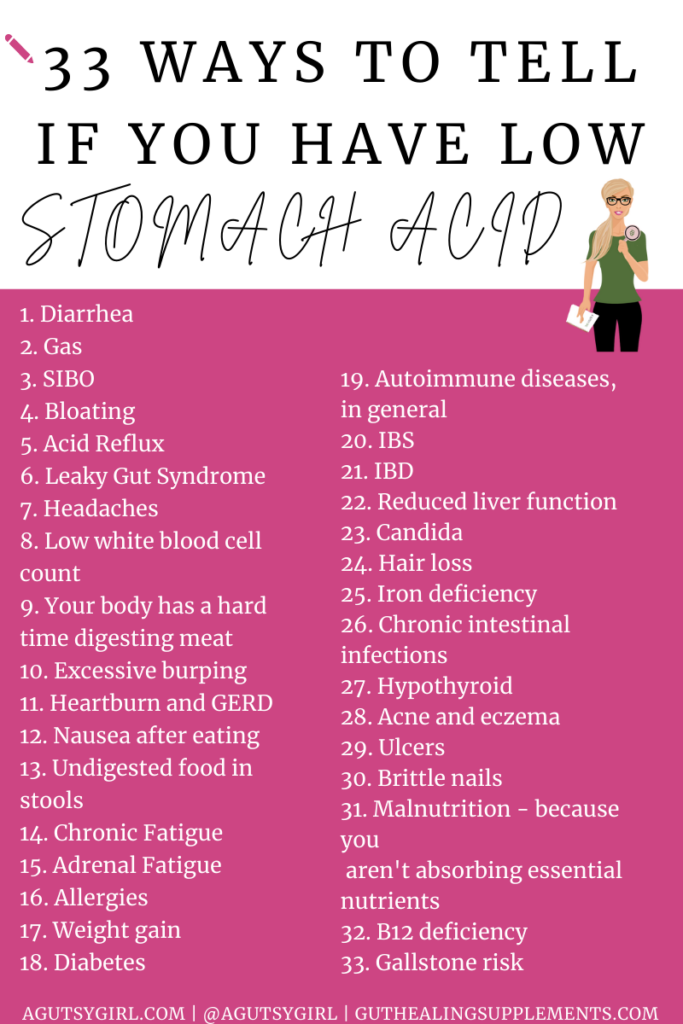
Low Stomach Acid Symptoms
So, how do you know if you have low stomach acid?
Well, the truth is that many in this community do – most just don’t know it and/or they have been told “too much stomach acid; go on an acid blocker of sorts.”
Here are 13 low stomach acid symptoms:
- Diarrhea
- Gas
- SIBO
- Bloating
- Acid Reflux
- Leaky Gut Syndrome
- Headaches
- Low white blood cell count
- Your body has a hard time digesting meat
- Excessive burping
- Heartburn and GERD
- Nausea after eating
- Undigested food in stools
Is HCl a Strong Acid?
So, is HCL a strong acid?
According to the University of Nottingham,
HCl is a strong acid because it dissociates almost completely.
By contrast, a weak acid like acetic acid (CH3COOH) does not dissociate well in water – many H+ ions remain bound-up within the molecule.
But what is the pH of HCL? Because remember from stomach and pH levels that the stomach pH and food pH are not the same.
HCl pH
So, where does HCl line up?
It’s at a zero according to THIS Dummies graphic.
After that comes natural stomach acid, which is at a 1. Lemon juice is at a 2. And cola, beer, and vinegar is at a 3.
Those are all very low, but none are as low as straight HCl.
So if you need to increase stomach acid, it seems only natural that you might supplement with HCl, correct?
Well, it worked for me.
But remember, that’s not to say it will absolutely work for you.
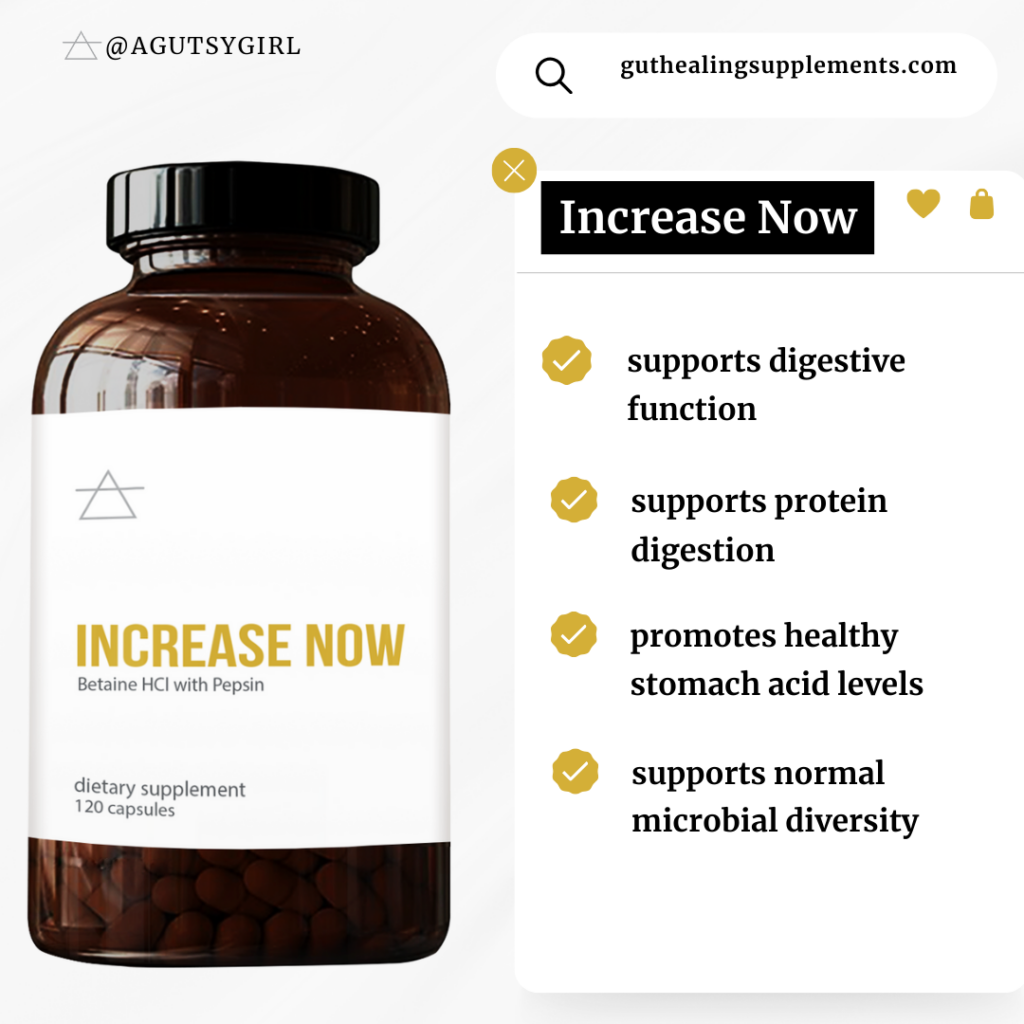
Looking to increase stomach acid, reduce bloat, and help break food down better? Check out Increase Now.
HCl Supplement
If your stomach acid is low and you’re finding it problematic to break down protein, talk about supplementing via HCl with your practitioner.
Yes, that’s what the HCl supplement is for – breaking down protein.
But there’s more.
An HCl supplement is often taken in conjunction with an enzyme called pepsin, and this is what may help increase your stomach acid.
Betaine HCl with Pepsin
In All About HCL I break down both betaine and pepsin.
Read the full article for the long version.
The short version is this:
- Betaine is an amino acid.
- Pepsin is a stomach enzyme that serves to digest proteins found in ingested food.
Now you can see why you want to choose an HCl supplement that states on the bottle, “Betaine HCL with Pepsin.”
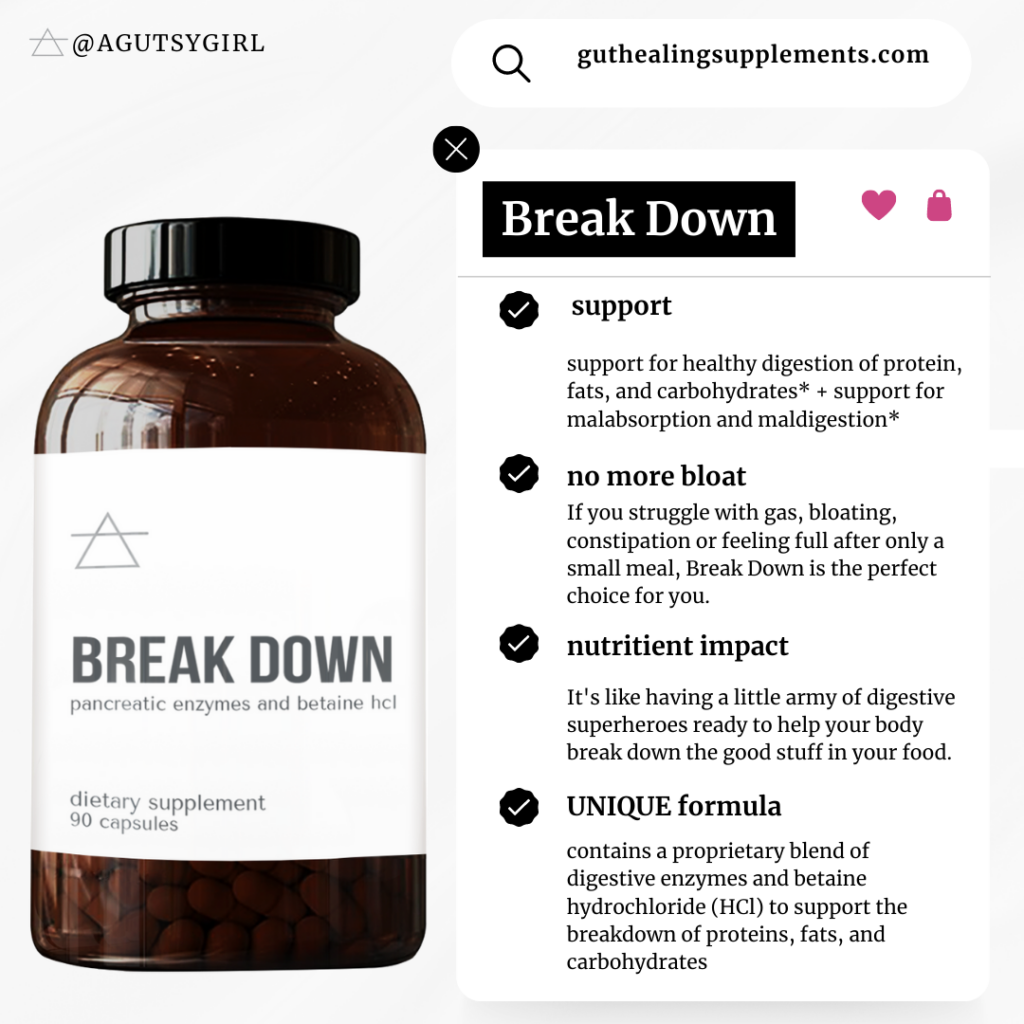
Now you can get BOTH your HCl + a Digest Enzyme in one with Break Down!
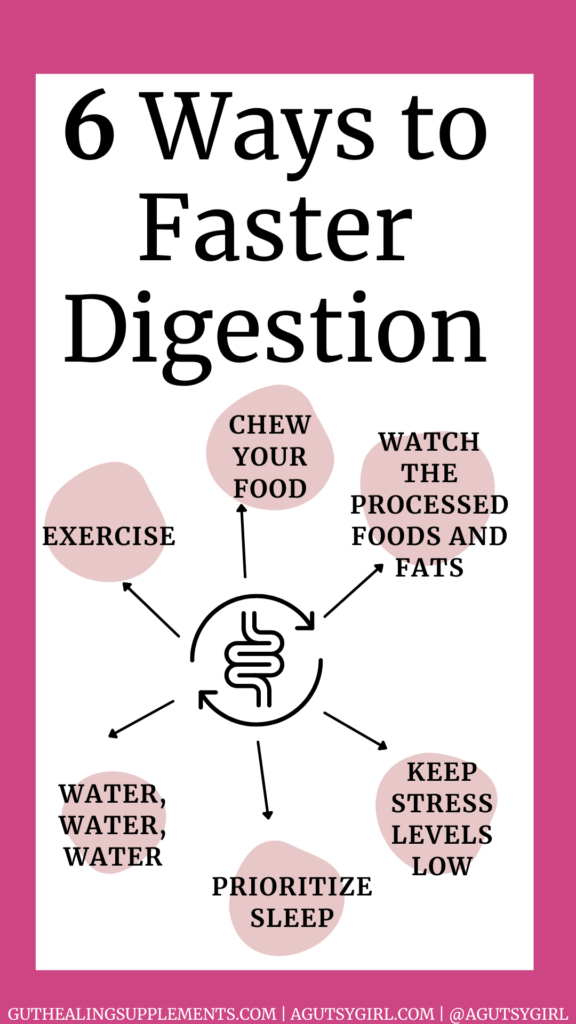
How To Digest Faster
Click HERE to save these ways for later.
There are many reasons people need help with stomach acid and/or enzymes.
But one of the most common reasons I hear from women is due to sluggish digestion leading to constipation.
So, before we talk in more detail about digestive enzymes, let’s talk about ways to digest food faster. And when I say ways, I mean the “natural” ways.
If you have stomach pain, bloating, or any other type of discomfort, the following tips may help you naturally speed up digestion.
Exercise
Exercising is a wonder medication.
In addition to all the other benefits exercise brings, moving your body can assist your digestive system in moving food through it.
Alternatively, inactivity has decreased gastrointestinal motility and transit time.
However, for this community, I always have to caveat: More exercise is not better. And, in fact, more exercise might be making your digestion sluggish.
Choose simple activities that focus on movement vs. stress.
If you want ideas and inspiration for this, listen to this podcast episode with Bethany Davis.
Watch the processed and fast foods
Healthy fats have been known to help with digestion. These include things like: Avocados, almonds, chia seeds, olive oil, and seafood.
However, fats that are present in processed and fast foods may impede digestion.
These meals promote constipation because they are high in fat, take longer to digest, and are low in fiber.
Water, water, water
Did you know that roughly 60% of the body is made up of water?
But did you also know that 75% of your stool is water?
Because the majority of the body is water, it is essential that we get enough of it on a daily basis.
The reality is that many do not get enough water per day, which leads to less than desirable digestive side effects (read: constipation and nutrients which are more difficult to absorb).
Prioritize sleep
Another win for the sleep point.
Disrupted rest appears to harm digestion the next day. And when I did my personal sleep study, I made note of that correlation every single time.
Keep stress levels low
Stress, if you recall from our previous 9,345 conversations (!) can slow digestion because the body is prioritizing whatever stress is at hand instead of digestion.
You know…..why would your body focus on digesting that meal when you’re telling it, “I’m running from a tiger. Help?!”
Chew your food
Do you eat without chewing your food? If so, your fast-paced eating habits may be causing delayed digestion.
Salivary enzymes start breaking down food in your mouth.
Your teeth aid digestion by smashing resistant food surfaces and skins into a pulp that can penetrate digestive enzymes.
Digestion begins in the mouth.
Digestive Enzymes
Okay, now that we have discussed HCl and also natural ways to speed up digestion, let’s chat all about enzymes.
First, what exactly is a digestive enzyme?
Digestive enzymes help break down the foods eaten into nutrients, which will become absorbed by the body. (This is essential because most key nutritional components are too complex for immediate absorption.)
Digestive enzymes help turn larger molecules found in foods (carbs, protein and fats) into more easily absorbed particles (such as amino acids, fatty acids, cholesterol, simple sugars and nucleic acids).
They are critical (the body naturally produces them), but yet various factors cause them to decrease in abundance.
When to take digestive enzymes
Enzymes are vital in many physiological functions.
Fats, proteins, and carbs are broken down by natural digestive enzymes such as amylase. Enzyme pills might also aid improve digestion.
But taking these supplements at the incorrect time may render them ineffective.
So….when should digestive enzymes be taken?
Enzymes Should be Taken with Food
Take enzymes exactly as indicated on the bottle.
Generally, you should take digestive enzyme supplements with food. In many cases, they need to be taken with specific foods to work correctly.
Taking lactase supplements with dairy products helps digest milk sugars.
Similarly, amylase pills help the body digest complex carbohydrates found in legumes and vegetables, reducing bloating and gas.
Consult the product’s instructions for when to take digestive enzymes or supplements. A few digestive aids are meant to be taken with food, while others are best taken just before eating. Check the dosage, which varies depending on the enzyme supplement’s type and potency.
If unsure, see your pharmacist or nutritionist.
Best Digestive Enzymes Supplement
There are many digestive enzyme supplements on the market.
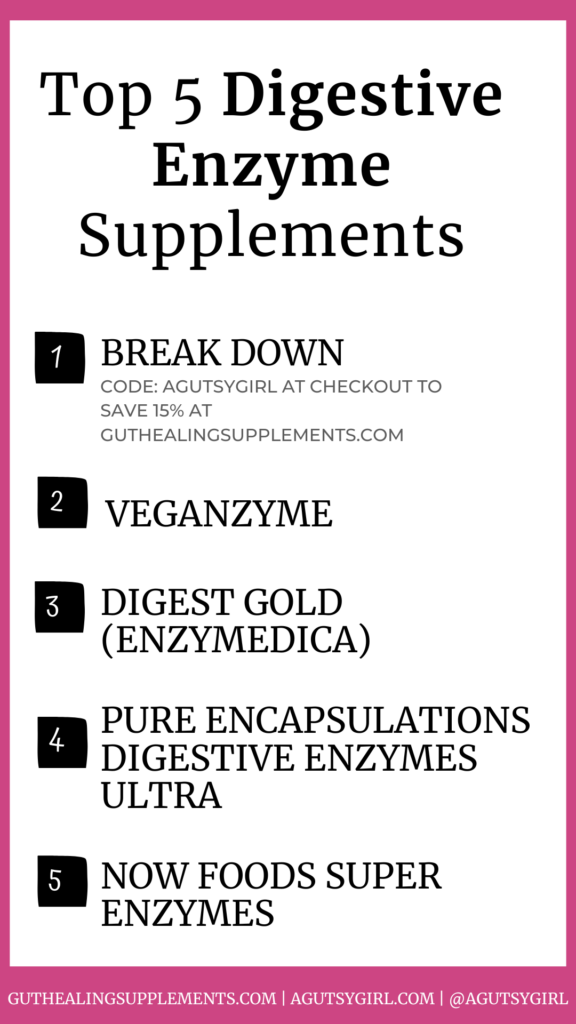
Break Down
This is from A Gutsy Girl’s supplement line; the one created and crafted for the Gutsy community.
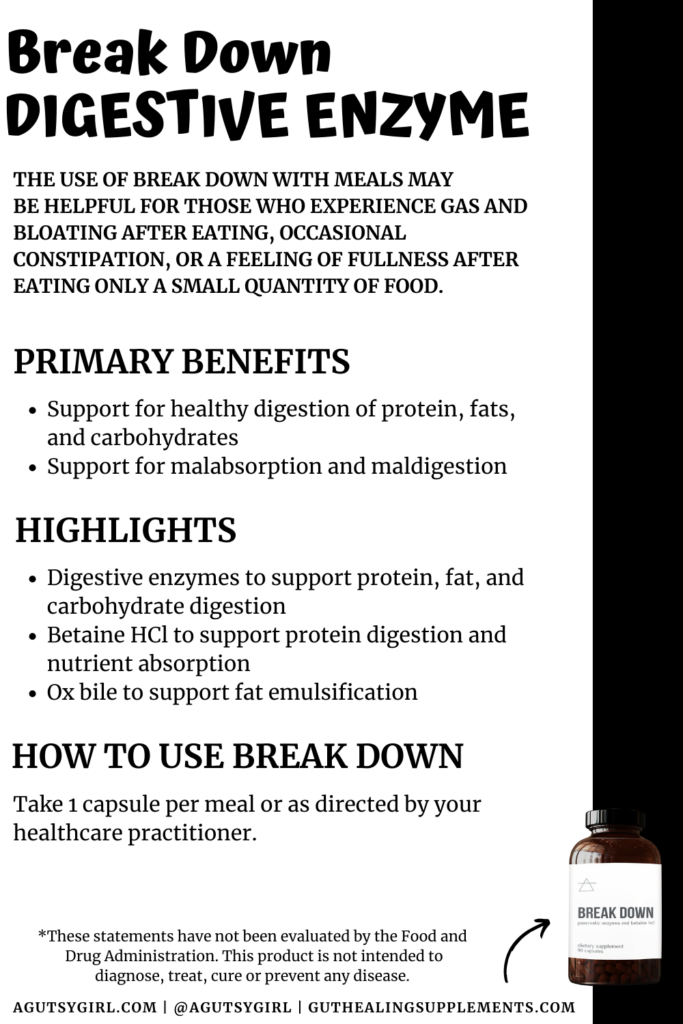
However, here are some other enzyme supplements on the market to consider:
VeganZyme
100% Vegan Systemic & Digestive Enzymes Blend – VeganZyme is a highly advanced systemic and digestive enzyme blend.
This blend contains a broad spectrum of kosher-certified vegetarian enzymes that help to digest all food sources. VeganZyme is also used as a systemic enzyme blend to break down excess mucus, fibrin, various toxins, allergens, and excess clotting factors.
Get it HERE. Use code ‘GUTSY10’ at checkout to save an automatic 10%.
Digest Gold (Enzymedica)
Enzymedica has been a long-trusted brand for me. I have used several of their products on my journey and I adore them.
Their enzymes are a high potency digestive enzyme blend that help break down your food quickly so your digestion works more smoothly.
They also contain a Purify promise: Contains no gluten, milk, casein, soy, egg, artificial colors, flavors, or GMOs; Vegan, Kosher and Clean Label Project Certified.
Pure Encapsulations Digestive Enzymes Ultra
The capsule is devoid of common allergies and contains digestive enzymes for nutrient absorption.
The company also makes one with added HCL to the enzyme.
You’ll find both via my Fullscript dispensary HERE.
Note: You can save a lot on your supplements when purchasing through Fullscript….ALWAYS extra savings + 15% on top of it that I provide customers.
NOW Foods Super Enzymes
This is a lower-cost option. The formula includes: Betaine HCl, ox bile, papaya fruit powder, bromelain, and more.
Get it via my Fullscript dispensary HERE.
Food Enzymes
And remember, many foods contain natural digestive enzymes.
If you read my previous post on digestive enzymes (What are Digestive Enzymes – linked above), then you remember this list of 15 foods that contain enzymes.
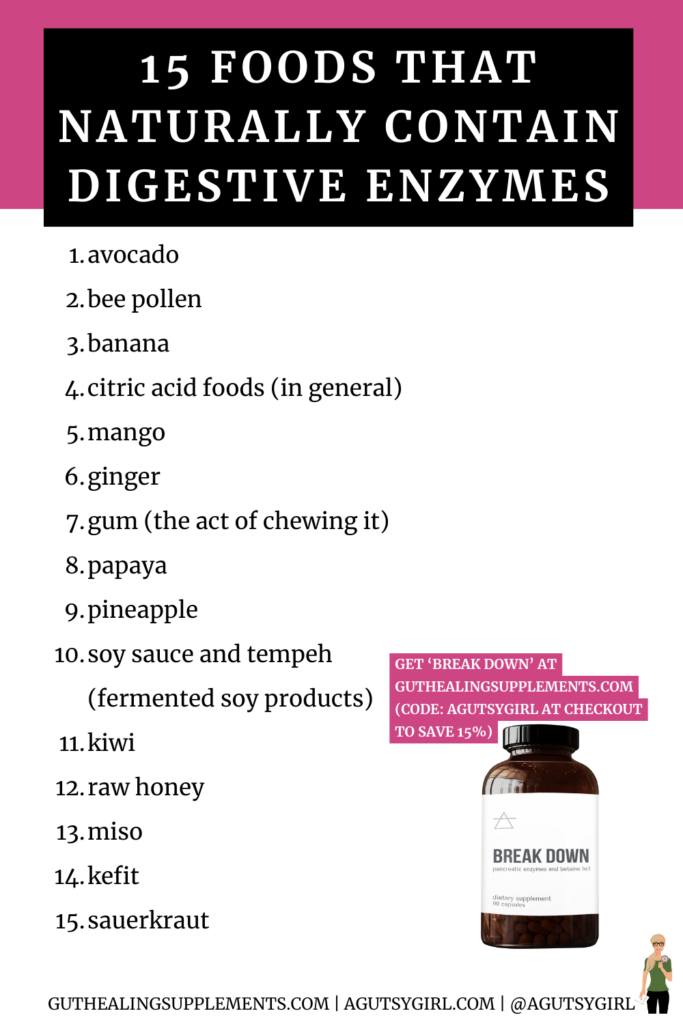
To add to the list from my previous article, here is more information on some of those foods as it relates to enzymes:
Pineapple
Pineapples contain a digestive enzyme called bromelain. Proteases are enzymes that break down protein into amino acids. This promotes protein digestion and absorption.
In fact, did you know that if you use bromelain powder it can help tenderize tough meats?
Research on adults with pancreatic insufficiency found that consuming bromelain with a pancreatic enzyme supplement helped digestion more than the enzyme supplement alone.
Papaya
Another tropical fruit high in digestive enzymes is papaya.
Papayas, like pineapples, contain proteases that aid in protein digestion. However, they are part of a distinct protease family called papain.
Papain is also a meat tenderizer and digestive aid.
Taking a papaya-based mixture may help relieve IBS symptoms including constipation and bloating. Papayas should only be eaten ripe and uncooked as heat can damage their digestive enzymes.
Mango
Mangoes are a summer favorite tropical fruit.
They contain amylase, digestive enzymes that break down starch (a complex carb) into simple carbohydrates like glucose and maltose.
Mangoes’ amylase enzymes grow more active when they ripen. This is why ripe mangoes taste sweeter.
The pancreas and salivary glands produce amylase enzymes. They aid in carbohydrate digestion and absorption.
So chewing deeply before swallowing helps amylase enzymes in saliva break down carbs for easier digestion and absorption.
Honey
Americans eat around 400 million pounds of honey per year .This tasty beverage is loaded with nutrients, including digesting enzymes.
These enzymes are found in honey, especially raw honey.
- Diastases: Break down starch into maltose
- Amylases: Break down starch into sugars like glucose and maltose
- Invertases: Break down sucrose, a type of sugar, into glucose and fructose
- Proteases: Break down proteins into amino acids
If you want to reap the benefits of raw honey’s digestive health benefits, make sure you purchase it in its raw form.
Processed honey is frequently cooked, and high heat might cause digestive enzymes to be destroyed.
Bananas (and apples?!)
In addition to bananas, which have natural digestive enzymes, apples also contain digestive enzymes.
This is because they include amylases and glucosidases, two types of enzymes that break down complex carbohydrates such as starch into smaller and more easily absorbed sugars.
As bananas begin to ripen, these enzymes begin to break down starch into sugars, much like they do in mangoes.
Remember our conversation on bananas?!
Besides having a high enzyme content, bananas are also a good source of dietary fiber, which may be beneficial for digestive health. A medium banana (weighing 118 grams) contains 3.1 grams of dietary fiber.
Avocados
Avocados are unique among fruits in that they are heavy in good fats and low in sugar, which makes them very nutritious.
Lipase is a digestive enzyme found in these foods. This enzyme aids in the digestion of fat molecules into smaller molecules, such as fatty acids and glycerol, which are easier for the body to absorb. It is found in the liver and intestine.
In addition to being produced by your pancreas, there is no requirement for it to be obtained through your diet. Taking a lipase supplement, on the other hand, can aid to ease digestion, particularly after a high-fat meal.
Avocados also contain additional enzymes, such as polyphenol oxidase, which is a powerful antioxidant. When avocados are exposed to oxygen, this enzyme is responsible for the browning of the green fruit.
Natural foods information source: HERE.
Enzymes vs HCL
Okay, so now that we have reviewed a ton of information on both digestive enzymes and HCL, let’s head back to the beginning of this conversation.
Do you need both a digestive enzyme and HCL?
First, in case it wasn’t clear above, many digestive enzymes contain HCL. Oftentimes you see them together. What that tells us is that many people do need both.
But, definitely not everyone.
They are two different supplements that can be highly beneficial when used in conjunction with each other – not necessarily at the same time.
You should understand what and why you are having troubles breaking food down. Typically there are two main areas you could be having problems with:
- breaking down protein + fat
- digesting complex carbs + sugars
I, in fact, had problems with both. Hence, the digestive enzymes and HCL were life changing.
If you understand what each supplement is intended to do, then you can get your gut healing journal out to review what you’ve eaten/reactions and work with your practitioner to identify which supplements might support you best.
If you want to start tracking in a food journal today with my proven system, download the 28-day gut healing journaling system HERE. Otherwise, let us ship you the physical, spiral-bound copy.
One last thing I want to touch on, since I already know the question will arise…..
How about digestive enzymes vs probiotics? Are they the same?
Digestive Enzymes vs Probiotics
The answer is a resounding, No.
Digestive enzymes and probiotics are not the same and you’d never use one instead of the other for addressing a single problem.
You would either use one in particular to address a single problem or both to address various issues.
To maintain a healthy digestive system, people often take digestive enzymes as well as probiotics.
They both work to promote digestive function and avoid an imbalance in the gut, despite the fact that their activities are completely distinct from one another.
Probiotics, unlike digestive enzymes, are living proteins.
Enzymes help break the food down while probiotics encourage ‘good gut bacteria’ (pro = supporting).
However, think about some of the probiotic-rich foods we consume: yogurt, kimchi, sauerkraut, kefir, etc.
Many people have a hard time breaking some (or all) of those down.
Instead of avoid them, though, you can get the benefits of the probiotic-rich foods by taking a digestive enzyme to help break down the proteins contained within them.
Conclusion
In conclusion, digestive enzymes and HCl are different. They are also different from probiotics.
You might need one, two, three, or none of them.
The secret is identifying what you need and why you need it so that you can rely on them less overtime.
If you liked this post, you might also enjoy:
- 11 Ways to Naturally Improve Stomach Acid Production
- 12 Ways to Increase Stomach Motility
- 15 Supplements for Stomach Lining Support
Xox,
SKH