
If an apple a day keeps the doctor away, then does a kiwi a day keep constipation at bay?
Prior to doing much research on the topic and kiwifruit in general, my hypothesis was that yes kiwi does keep constipation at bay.
The hypothesis was created from actual experience.
In other words, I eat the fruit, and it works wonders.
So let’s chat about the kiwifruit.
Kiwi
Click HERE to save this post for later.
Before we talk more about kiwi for constipation, let’s understand more about the kiwifruit in general.
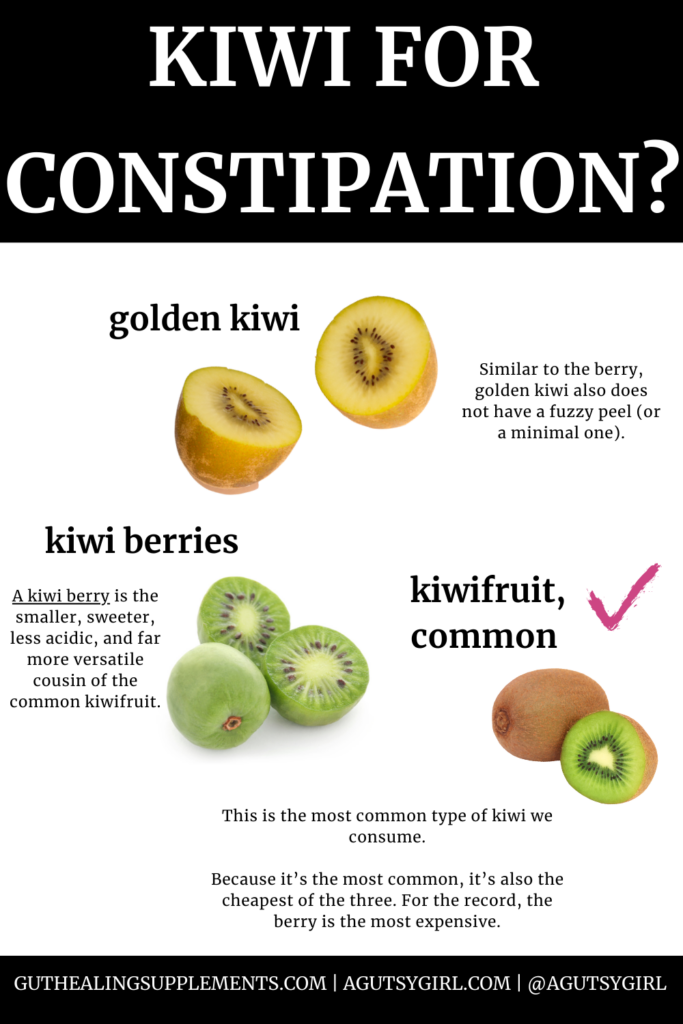
So that we are on the same page, first we must understand kiwifruit, kiwi berries, and the golden kiwi.
Kiwi Berries
Kiwi berries are not the same thing as the kiwifruit you are likely thinking of.
A kiwi berry is the smaller, sweeter, less acidic, and far more versatile cousin of the common kiwifruit.
It is about the size of a grape and there is no major fuzzy peel to remove. In other words, you can eat it as-is. Although, there is a little hard stem-like edge that many choose to remove prior to eating.
When you cut open these berries they look exactly like the kiwifruit, but just in a miniature size.
Golden Kiwi
Similar to the berry, golden kiwi also does not have a fuzzy peel (or a minimal one).
However, it does still have a peel that looks similar to kiwifruit. In fact, the golden kiwi looks almost the same as a common kiwi.
The inside of the golden kiwi is, you guessed it, golden.
Kiwifruit
This is the most common type of kiwi we consume.
Because it’s the most common, it’s also the cheapest of the three. For the record, the berry is the most expensive.
And the reason I wanted to break down these three varieties is because it’s the kiwifruit which has been studied for its constipation relief abilities. (But that’s not to say the others don’t work; just maybe to a lesser degree.)
If you want even more on all three, The Produce Nerd is going to quickly break it down for you.
Okay, so now it’s time to understand more about kiwifruit as it relates to constipation because that’s what you really want to know, yes?
Kiwi for Constipation
One study showed this:
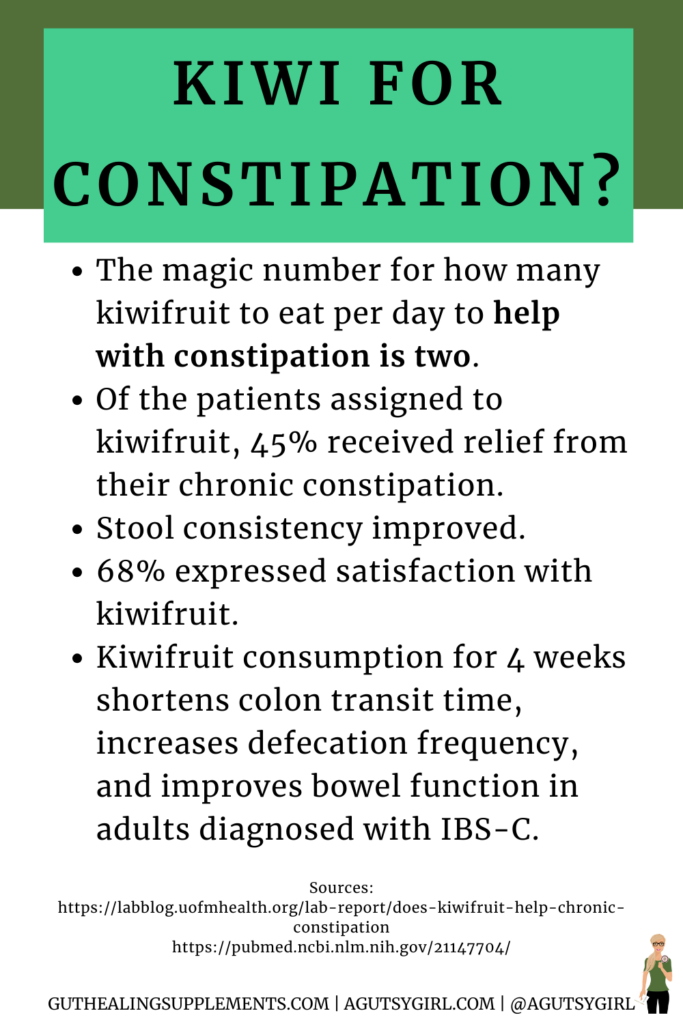
- Of the patients assigned to kiwifruit, 45% received relief from their chronic constipation.
- Stool consistency improved.
- 68% expressed satisfaction with kiwifruit.
Another study found that kiwifruit consumption for 4 weeks shortens colon transit time, increases defecation frequency, and improves bowel function in adults diagnosed with IBS/C.
The magic number for how many kiwifruit to eat per day to help with constipation is two.
But there’s more….
Kiwi Seeds
The question is,
Why does kiwifruit work for constipation?
Yes, the seeds are definitely part of the equation; just not the full equation, as many might think.
Kiwifruit seeds provide fiber, but this is just one piece for why kiwifruit might help with constipation.
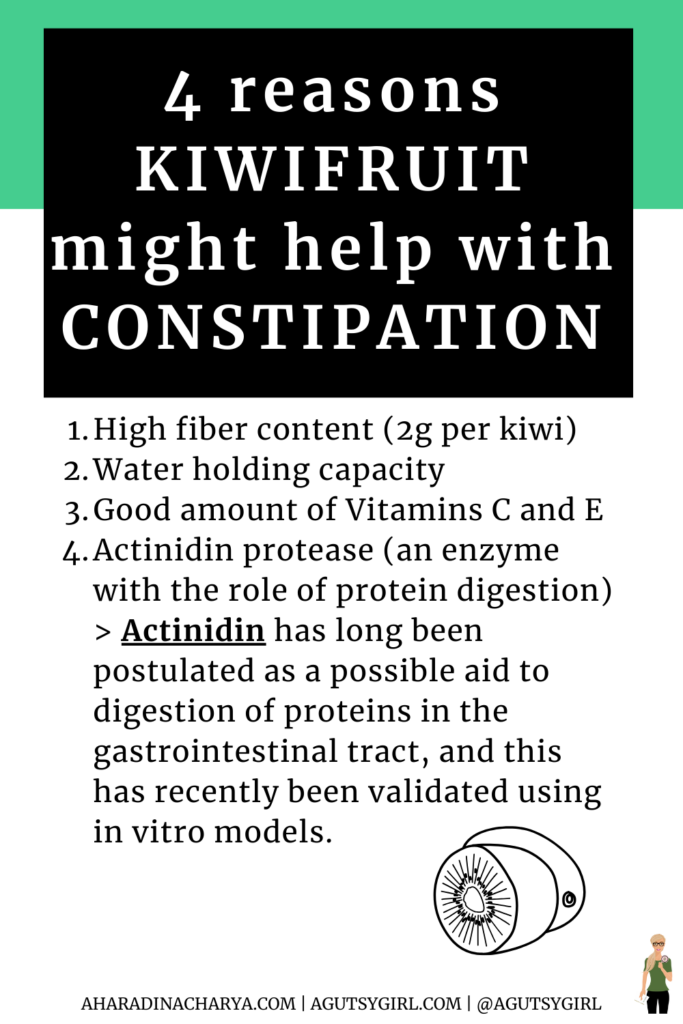
Here are the 4 reasons why kiwifruit might help with constipation:
- High fiber content (2g per kiwi)
- Water holding capacity
- Good amount of Vitamins C and E
- Actinidin protease (an enzyme with the role of protein digestion)
- Actinidin has long been postulated as a possible aid to digestion of proteins in the gastrointestinal tract, and this has recently been validated using in vitro models.
Can You Eat Kiwi Skin?
Go ahead, eat the skin. In fact, you’ll reap even more fibrous benefits if you do.
Also, kiwifruit is on the Clean 15 list, which you’ll find in the back of The Leaky Gut Meal Plan. I’d still recommend washing your kiwifruit, especially if you’re eating the skin.
Nonetheless, go for the skin on! Well, or don’t, if you don’t desire to eat the skin. The truth is that I don’t eat mine with the skin on and it still works little miracles.
Kiwi Carbs
While there are approximately 10g of carbohydrates in kiwi, your two kiwifruit per day is low-FODMAP. This graphic is taken from Reasonable SIBO.

I’m always asked about sugar and carbs in fruit and what I think about them. I think you should eat them; that’s the answer.
Unless there is a specific medical reason for why you cannot eat a specific food, then don’t cut it out just because.
And especially when it comes to fruit and vegetables, you’re reaping far more benefits by keeping them in than taking them out.
So the research backs up my hypothesis.
In case you, too, are interested, give it a try.
Get out your 28-day gut healing journaling SYSTEM, track the kiwifruit eaten and bowel movements taken. See what happens!
If you liked this post on kiwi and constipation, you might also enjoy:
Xox,
SKH

🤰 bloating be gone! weight loss through optimal gut health for women
💃ʜᴇᴀʟ ʏᴏᴜʀ ɢᴜᴛ. ʜᴇᴀʟ ʏᴏᴜʀ ʟɪfe.
🫶🏻 founder gutbyome.com